
There’s no feeling in the world that’s similar to the one evoked by real, human interactions, and this exact feeling is one which has been illustrated through advertisements for years, whether it’s through the depiction of families spending time together, or fictional figures like Santa Claus making children happy. These Christmas advertisements are things that allow individuals to forget about whichever conflicts may be impacting their lives, even if it’s just for thirty seconds, and feel the festivity slowly seep into their beings.
For decades, companies have embraced this holiday spirit through advertisements portraying the most memorable aspects of Christmas: music, gifts, and family. These videos demonstrate the human connections fostered through the Christmas season, and the warmth created from these relationships, even despite the external cold weather at this time of year. However, in recent years, the spirit of festivity previously illuminated through the familiar Christmas advertisements has dimmed as a result of the AI usage by multi-billion dollar companies.
Sure, generative AI is an innovative feat, but there are also situations in which you should (arguable) and shouldn’t implement it. Wanting to depict emotionally charged commercials is one of their situations where you absolutely shouldn’t even breathe near the AI technology. This is largely due to the fact that generative AI doesn’t have a perception of human emotion or the weight that these subjective Christmas experiences bring onto the average human. You’re able to physically feel the distance between multi-billion dollar corporations and average viewers grow exponentially once the creators of these beloved advertisements decide it’s a great idea to create an entirely fake video. Two examples of this include Coca-Cola and McDonalds, both of which recently introduced fully AI-generated advertisements to promote their brands during the Christmas season.
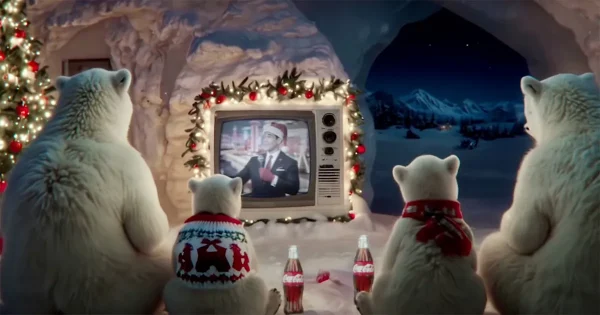
There’s nothing inherently festive about Coca-Cola. Yet, as a brand, they’ve been intrinsically linked to some of the most memorable Christmas commercials of all time. In fact, the most famous Christmas ad is widely considered to be Coca-Cola’s “Holidays Are Coming” campaign from 1995.
In other words, Coca-Cola has rarely faced backlash over the decades that these advertisements have been running—there’s virtually no harm to be done with commercials that simply tap into nostalgia and kindness around the Christmas season. This changed last year, when they decided to roll out a new method: an AI-generated commercial. After all, nothing screams “human connection” and “Christmas spirit” more than deciding to promote a video entirely filled with machine-generated elements and no living, breathing human beings.
Despite being one of the most recognizable brands during this holiday season, they certainly weren’t exempt from outrage and mockery from all sides of the internet. There was no shortage of details to make fun of, like the stiff and uncanny human faces, and the wheels on the Coke trucks that would randomly spin in different directions, if they were even rotating at all. Coca-Cola essentially destroyed their well-maintained cultural status with this “slop” video.
Furthermore, just this week, McDonald’s released an ad for the Christmas season and, just like Coca-Cola’s, it was completely AI generated. The ad followed people living through holiday setbacks and finding solace in their local McDonalds, a space void of stress. Unlike Coca-Cola, however, the ads reception was entirely negative: the video only had 20,000 views before being entirely taken down. Following the backlash, according to Futurism, the company that generated the ad came out with a defensive statement, stating that the production of this “film” took “seven weeks” where the team got little sleep. Typing prompts into generative AI took seven, long, tireless hours… is what they argued.
McDonald’s ad was entirely focused around humans – human struggles, human inconveniences, and human escapism. McDonalds, the world’s largest food chain, could have afforded to – and benefitted from – hiring actors for this ad, but they didn’t, and it highlights just how greedy and lazy major corporations are. When people are the subject of an ad, it’s a little ironic to not hire real, human actors at all. And, frankly, McDonald’s reaction to the backlash was extremely immature and unprofessional. It felt like a canceled influencer – they posted something weird, got mad at the backlash, turned off their comments, deleted the video, and then released a defensive statement rather than realizing how odd the ad was.
The public reaction speaks louder than the ad. Companies like Coca-Cola and McDonalds have the resources to pay actors and editors, but they refuse to do so, and people are exhausted of it. Users from across the internet, who are usually extremely divided, united for one thing: to make a mockery out of these big corporations’ comfort with spewing out pro-AI rhetoric and promoting it as if it’s greater than the human touch. If AI is the future, our future is filled with an overheated planet and a green Christmas, without the human connections that this season promises.