Winter is a season not many celebrate the arrival of. The sudden drops in temperature, slippery roads, and piles of hardened snow all come together to paint a picture of inconvenience. Despite these cons, there is one tradition that everyone comes together to enjoy with the approach of the holiday; gathering friends and family and enjoying a nice, heart-warming movie.
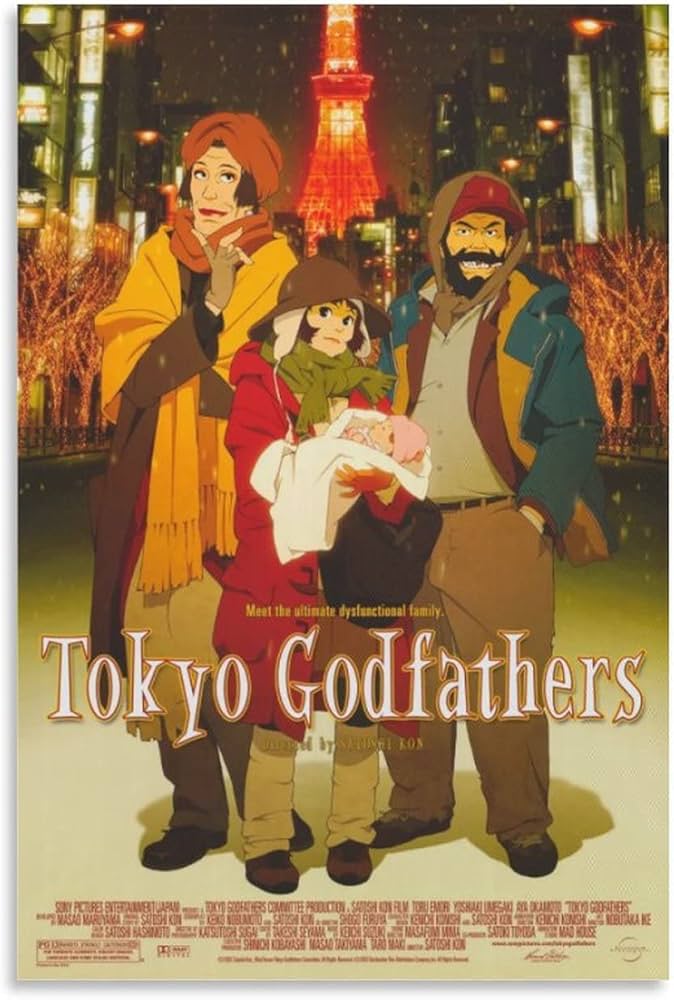
This is exactly what me and two friends decided to do one chilly Saturday in an attempt to boost our Christmas spirit. There were many choices to pick from in terms of what movie we’d dedicate an hour or so of our night to – classics, sequels of sequels, flustering romances, the same old options. While scrolling the list, however, one movie none of us had ever heard of popped up: Tokyo Godfathers. A theatrical release poster depicted four characters in a distinct Japanese art-style, standing together dynamically with snow fluttering behind them. Seeing as we hadn’t come across any other eye-catching films yet, we decided to find a website to watch this one on, lest we grew too weary from all the searching and lost the motivation to watch anything at all.
The entire experience, from the very start to the very finish, was a rollercoaster of emotions. Tokyo Godfathers, at its foundation, is a 92 minute long film advertised as a Christmas tragicomedy adventure, and it definitely proved itself to be just that. My small group and I took several pauses in between scenes to either catch our breath after long bursts of laughter, gawk at the screen in awe at the amount of thought put into each and every miniscule detail, or take short breaks to prevent ourselves from tearing up. It’s certainly not a traditional Christmas movie, not featuring any red-nosed reindeers or young children stumbling upon Santa’s supernatural secrets, but it touches on topics that challenge the viewer’s previous mindset while also sticking to the fluid script any Winter holiday movie might: a problem presents itself, and the main characters have to navigate their snowy world whilst trying to solve it. Along with this, the movie tackles the issues of abandonment, poverty, loss, redemption, and even manages to depict queer struggles along with general struggles.
A theme that remains consistent for the entirety of the movie, similarly to many other holiday movies, is family, most evident between the three main characters, who are all struggling with homelessness for their respective reasons but are determined to stick together despite their ups and frequent downs. Family, whether it’s the one founded between the three main characters or the personal ones they each have and mend throughout the duration of the movie, isn’t always depicted in the most positive of lights – it is a tragicomedy, after all – but all of the bittersweet events end in a hopeful, admittedly chaotic, miracle.
If I were to give a recommendation to any movie that I’ve ever watched, Tokyo Godfathers would be it. It balances realistic misfortunes with ‘magical’ conclusions and evokes a whirlwind of feelings that everybody should get the opportunity to experience.