On July 4th, 2025, President Donald Trump signed the ‘One Big Beautiful Bill’ Act which contained numerous tax and spending policies. One of the spending policies the act affected was for the Supplemental Nutrition Assistance Program, known as SNAP benefits (and formerly food stamps). SNAP benefits are monthly payments given to residents in order to afford food. These payments are placed in a special card known as an EBT card, used to exchange the money in grocery stores. The OBBB Act significantly cut SNAP, which posed a major threat to the people who relied on them. Thankfully, these cuts were not permanent, and SNAP benefits were returned to normal on November 14th, 2025, but that doesn’t mean all of the issues went away. In 2024, it was reported by Project Bread that 1 million households in Massachusetts were on SNAP benefits, with 31,014 being in Worcester. Beneath this lies a larger issue: Food insecurity.
Food insecurity is defined as “the condition of not having access to sufficient food, or food of an adequate quality, to meet one’s basic needs.” According to Project Bread, 1 in 3 households in Massachusetts were food insecure in 2024. In 2023, over 47.4 million people—7.2 million being children—lived in food-insecure households in the United States. Every day, there are children and adults who go hungry, and more often than not it goes unnoticed. Luckily, South High has been making additions to help support their students.
Early into the 2025-26 school year, South began to offer after-school snacks from Tuesday through Thursday every week. “We made the [decision] to start serving after school snacks once we recognized that we had many students who were staying after until the 4 PM late bus and some even later with sports.” says Olga Papadopoulos, South High’s principal, adding that the district allows for schools to request for these snacks. Soon, these simple snacks—which include a variety of juice boxes, yogurts, chips, and bisicuts—will be upgraded into ‘supper meals’, which will provide more filling meals for students who stay after.
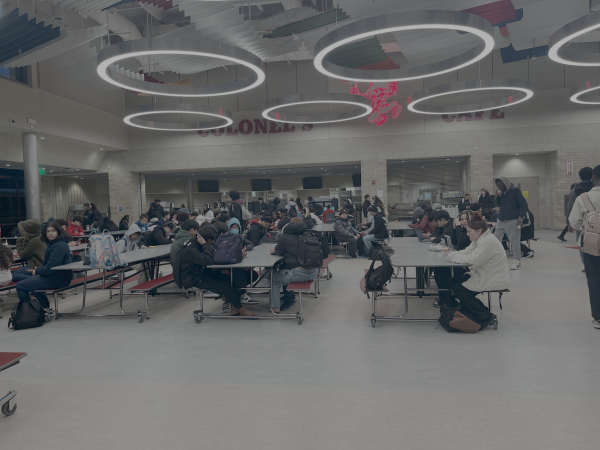
For years, South High—along with every other school in the district—have offered free breakfasts and lunches for students. Ms. Papadopoulos emphasized the importance of these free meals in combatting food insecurity, as “it’s a free and easily accessible option available to every one of our students.”
This isn’t the only way South is helping, however. Two years ago, the school partnered with Juniper Outreach to open up a food pantry inside the school.
Started in 2020, Juniper Outreach is a non-profit organization based in Worcester that focuses on distributing food to students and families in need via local schools. Currently, the organization has supported eight schools in Worcester, with South High being their first high school supported back in October of 2023. Since then, the foundation has provided the school’s food pantry with a variety of foods monthly, ensuring that items that are requested the most are filled. Ms. Papadopoulos also adds that the organization recognizes that “not every student has access to a stove or oven[,] so many of the food options are microwaveable.”
“Resolving food insecurity in Worcester requires us to transition from temporary fixes to a permanent, community-driven support system.” says Papadopoulos. “We can start by strengthening the school-home connection through weekend backpack programs and increasing the number of in-school pantries that preserve family dignity and eliminate transportation barriers.”
She states that, “Beyond the school walls, we must leverage Worcester’s unique geography by connecting our urban centers with local agriculture through farm-to-school initiatives and community gardens,” adding that South has a “longstanding partnership” with Community Harvest, a non-profit organization based in Massachusetts that is dedicated to combatting food insecurity by sustainable farming practices and community engagement.
Food insecurity has been an ever-growing issue that is extremely common in every community. Despite this, many people are unaware of the issue even existing. In a time of egregious need, it is important for communities to step up for one another and support each other, either through volunteering at local food pantries, donating to organizations like Juniper Outreach, or simply telling people who live in food insecurity that they are not alone. Food is a universal human right, not a privilege or a pawn in a political game.
“On a broader scale, we must advocate for systemic changes—such as permanent universal free school meals and more robust food recovery programs—to ensure that surplus food reaches kitchen tables rather than landfills.” Ms. Papadopoulos stresses.
Additional Sites and Resources:
For more information, check out the Worcester Public School’s Food Assistance page.