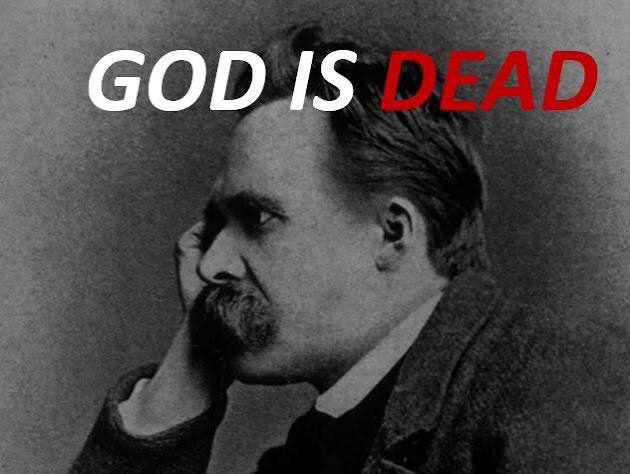
“God is dead.” It’s one of if not the most famous—and misunderstood quotes in philosophy. When Friedrich Nietzsche wrote this he didn’t mean it literally, as if God was a physical being who died. He wasn’t mocking or attacking religion, but actually diagnosing a problem. Instead, Nietzsche was describing a cultural shift taking place during that time. As science, reason, and modern thinking began to grow, religion stopped being what people went to when trying to understand truth and morality. In other words, when Nietzsche states that God is dead, he’s saying that traditional belief no longer holds the same authority over society as it did before.
Many people mistake Nietzsche for a nihilist but he was actually the response to it. The consequence of the shift from religion to science is not just the belief in God being removed, but the loss of a general sense of meaning and values. For all of history, religion was the answer for questions humans couldn’t yet answer—what is right, what is wrong, what is the purpose of life, how should one live. For example, the Greeks created mythology to explain natural phenomena, human behavior, and the origins of the world.
This is where Nietzsche’s philosophy becomes more complex. He believed that if traditional sources of meaning were going away, humanity would have to confront a difficult question: how do we create meaning in a world that no longer provides it automatically? Instead of turning back to religion, Nietzsche suggested that we must take responsibility and create their own meaning. He did not want to return to religion—especially christianity— because he saw them as a “life denying” force that discourages full engagement with life. In his view, Chirtsiniay promotes what he called “slave morality”, a moral framework built around pity, humility, and guilt. Nietzsche argued that the system was created by the weak, considering strength to be a negative attribute, encouraging obedience and self-denial over confidence. As a result, he believed it had the ability to hold back our potential. The phrase “God is dead” meant to Nietzsche that humanity had an opportunity to go beyond their traditions and create their own meaning.
Nietzsche’s concept of revaluation of values is another key component of his philosophy. According to Nietzsche, most of the values we accept are based on tradition and not by our own choice. We often believe in what is referred to as good or bad without questioning their origin.. With the decline of religious authority, he believed society has an opportunity to reevaluate those values.
Similar to this idea, is Nietzsche’s concept of the “Ubermensch,” translated as the “Overman” or “Superman.” The Ubermensche is not a physical being with extraordinary powers, but an individual who created their own values and lives with independence from traditional moral constraints. This figure represents someone who does not rely on any external powers, such as religious or social, when defining their meaning and purpose, but rather create it themselves with the help of their own will and responsibility.
However, Nietzsche was aware of the fact that the shift would not be easy at all. Without any guidelines in regard to the meaning of life, one could easily fall into nihilism—the belief that life has no inherent purpose or value. To him, nihilism is one of the greatest dangers of modern times, particularly because of the weakening of traditions that used to provide people with guidance. Therefore, the phrase “God is dead” is not just a statement about religion, but a warning about the philosophical consequences of a changing world.
Nietzsche’s message is not just about the loss of religion, but about what humans choose to do in response to that. Not having a source of meaning creates both a challenge and an opportunity. It forces us to confront meaning not as something given, but as something created. Whether society can successfully adapt to this responsibility remains a question that continues to shape modern philosophy today.