This year, students in the Early College course, ENG 101, have been doing an academic study of pop culture. What they have learned is that pop culture is not just “what’s popular” – it is an important part of our society that can have real impacts on values, norms and relationships. Read ahead to learn how Jason Bui synthesized his learning into a look at how pop culture can even affect relationships between teenagers and parents!
The term “pop culture” was coined quite recently—around the nineteenth to twentieth century. However, it wasn’t until after the Second World War where the term pop culture became significantly relevant. This is due to the media in the 1950s defining a newly prominent age group called “teenagers”; a group of adolescents who were depicted as rebellious trouble makers who were going to damage the traditional values that society had valued so much. Although society views teens as naive, pop culture offers opportunities for teens to separate from their parents through self discovery of values and interests.
Pop culture has several definitions depending on the context and the way it can be interpreted. According to the EBSCO definition of pop culture, it can be defined as anything that is not high culture, but rather considered a form of ‘lower culture’. As the era changes, so do the perceptions of the individuals living through it. What the older generation such as parents perceived as “proper” in regards to activities, music, and other forms of expression, their children might have thought differently. “The 1950s set the stage for the explosion of pop culture in the 1960s. {…} influencing not only pop music but also fashion and hairstyles. {…} in the 1960s was characterized by rebellion, freedom from norms, and drugs, sex, and rock and roll” (Larson). However, it is unlikely that parents would approve of their children following such a path of delinquency—this would undoubtedly drive a wedge in the parental child relationship. With the rise of easier media access and more figures expressing controversial opinions within all industries‒‒pop culture ends up igniting a spark for adolescents to think and explore their true sense of identity. It would give them a chance to break away from their parents if they are not willing to understand the shifting cultural beliefs that are consistently taking place.
Now as we dive deeper into the conflicts of various cultural beliefs among all forms of media, religion, and politics, it is essential to understand the power of pop culture’s influence. Pop culture can act as a “a universal language that manages in all of its seemingly trivial glory to make us dream and smile to connect us across racial, political, and social divides” (Philippe). What Philippe says perfectly describes what pop culture can do: bring national and local unity among communities. Teenagers who are unable to connect to their parents because of generational differences can use pop culture to find individuals who are similar to them. If pop culture is considered “low” by the older generation, teenagers can find comfort in one another through shared experiences. These shared experiences can include struggles with identifying their interests, passions, hobbies, and other things that they may have enjoyed. This sense of peace found in pop culture subcommunities would have not been found otherwise if all the child does is conform to their parents’ traditional values rather than explore the opportunities offered by a changing time.
In a teenager’s path to find who they are and navigate the uncertain purposefulness of their future, it can almost be described as a hero’s journey. According to Nathan Baugh, the author of The Psychology of the Hero’s Journey, he writes, “the usual hero adventure begins with someone from whom something has been taken, or who feels there is something lacking in the normal experience available or permitted to the members of society”. A teenager often feels lost and scared due to an increased awareness and maturity. These feelings tend to be difficult for such a young mind to handle, so it is important for a teenager to go and explore the world. A sense of welcomeness and safety can only go so far in the home before families can become restricting. With parental understanding becoming more limited, teenagers will typically feel unguided at home and will feel the need to spread their wings. A teenager then goes and sees that life isn’t just a journey with only one set of beliefs instilled by our parents—but instead our own direction that we can choose to follow. What the teenager gains from looking into pop culture is more than just enjoyment; it’s fulfillment. That is the “life-giving elixir” that they earn from finding their places among other like-minded teenagers who have experienced the same hardship.
These “places” they find aren’t just figurative—they can also be physical locations such as high schools and after school clubs. With a more mandatory emphasis on education after World War II, children were more likely than ever to finish high school. Education did not come with just good grades but also something much more valuable. “High schools gave young people a place to build a separate culture outside the watchful eye of family” (Thompson). The period of time where adolescents typically diverge and develop their own beliefs typically occurs at the same time they are in high school. High school offers plenty of opportunities for teenagers to discover what they like through community. Whether that could be through a sport, club, or other extracurricular activities, it can become a melting pot of beliefs. These beliefs can ultimately shape pop culture as pop culture can be an umbrella term for what many different groups enjoy. What parents may dislike or see as rebellious can be seen as a feeling of belonging and comfortability among their peers who may have encountered the same results back at home. Parents typically don’t think too much about what their children do or watch who they hang out with in the school—high school is a perfect place for teenagers to take advantage of discovering their real values.
Another way teenagers can be encouraged to find their real values can be through the media. This can include television, movies, games, or even comic books. In the 1950s, juvenile delinquency films were being created to portray teenagers as rebellious individuals who needed to be kept in check. This intention to discourage teenagers from being their own decision makers backfired and actually had the opposite effect towards teenagers. David Buckingham, who authored the article Troubling teenagers: how Movies Constructed the Juvenile Delinquent in the 1950s observed that “selling representations of juvenile delinquency as a form of entertainment {…} offered a vicarious {…} sensation of power for younger viewers, who experienced relatively little power in their own everyday lives”. Teenagers being portrayed as main characters with the ability to create their own decisions regardless of consequences was huge to adolescents. Back then and even now, parental dynamics were always in the parents’ favor rather than what the child thought. A different thought or idea that the parents didn’t like were either criticized, disliked, or dismissed as juvenile delinquency. With pop culture becoming a core value through movies and entertainment, it pushed for teenagers to continue the formation of new ideas derived from their young curiosity. Parents tend to forget that teenagers are still humans who can think and can change, regardless if they agree with it or not.
The value of pop culture can still be seen today in several forms of entertainment: like in the show, “Young Sheldon” by Chuck Lorre and Steven 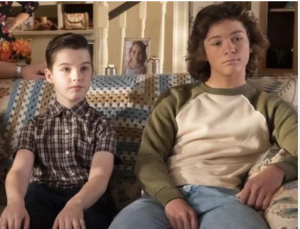 Molaro. Two characters, Georgie and Sheldon are prominent examples of adolescents who have differing beliefs from their parents. Georgie wants to go to work rather than go to school—while Sheldon wishes to go to college early since he feels ready at a young age. Both parents disagreed with them due to their age gaps supposedly being connected to a lack of maturity and understanding of the real world. These feelings of contrast and family turmoil is not just popular fiction; but a real world problem that consistently fails to be acknowledged. As pop culture continues to grow, so do more thoughts that do not reside with traditional parental beliefs. It is critical to understand that pop culture is a bigger opportunity than ever for teenagers to express how they feel. The increased accessibility to pop culture and its diverse forms of media has created several communities that have developed over the years. Now—more than ever—can teenagers finally separate from their parents only if they are not being given opportunities to self explore their identities and emotions.
When we get older and eventually time moves on from our generation, the cycle will continue whether we try to stop it or not. Our beliefs differ from our parents, but when we become parents too, our beliefs will most likely differ from our children as well. Teenagers deserve their freedom and our guidance. One shouldn’t be above the other to the point where it is harmful to our relationships. All we can do is continuously try to understand one another of all age groups. From parent to child, to friend to friend, or whatever relationships present in our lives. We can mitigate the struggle of changing eras and culture through empathy. Pop culture will forever change, and live on—we should be able to adapt to it and find our peace with it.
Works Cited
Larson, Alisa. “Popular Culture.” Research Starters: Social Sciences & Humanities, EBSCO Research, 2024, https://www.ebsco.com/research-starters/social-sciences-and-humanities/popular-culture. (ebsco.com)
Buckingham, David. “Troubling Teenagers: How Movies Constructed the Juvenile Delinquent in the 1950s.” Growing Up Modern: Childhood, Youth and Popular Culture since 1945, 1 Jan. 2019, davidbuckingham.net/wp‑content/uploads/2017/10/troubling‑teenagers.pdf. Accessed 7 Nov. 2025. (davidbuckingham.net)
Dishon, William. “Cinema Impact Analysis – The Breakfast Club.” Cinema Impact, 1 Jan. 2019, https://cinemaimpact.org/2019/01/01/cinema-impact-analysis-the-breakfast-club/. (cinemaimpact.org)
Philippe, Alexandre O. “Why Pop Culture?: Alexandre O. Philippe at TEDxMileHigh.” YouTube, uploaded by TEDx Talks, [Upload Date], https://youtu.be/u_3UYncNwz4.
Baugh, Nathan. “The Psychology of The Hero’s Journey.” Medium, 9 Dec. 2023, https://medium.com/@nathan.baugh/the-psychology-of-the-heros-journey-0bda883de114. (medium.com)
Thompson, Derek. “A Brief History of Teenagers.” The Saturday Evening Post, 13 Feb. 2018, https://www.saturdayeveningpost.com/2018/02/brief-history-teenagers/.